Complete Guide: Markdown to Word Conversion
Everything you need to know about converting .md files to .docx — from basic formatting to advanced elements like LaTeX, Mermaid, and complex tables.
Understanding Markdown and Word Document Formats
Markdown (.md)
A lightweight markup language created for easy writing and reading. It uses simple syntax with plain text formatting, making it ideal for version control, documentation, and converting to HTML or PDF.
Word (.docx/.doc)
Microsoft's industry-standard document format used globally for professional documentation. It offers rich formatting options, collaboration features, and compatibility with corporate environments.
Why Convert Markdown to Word Documents?
Professional Documentation
Convert technical docs into polished Word files for client deliverables and official reports
Team Collaboration
Share documents with colleagues who prefer Word's familiar editing environment
Academic Submissions
Prepare research papers and theses in Word format required by journals and institutions
Publishing Workflows
Export manuscripts and articles to Word for traditional publishing systems
Converting Tables, LaTeX Math & Mermaid Diagrams to Word
Precise Format Preservation
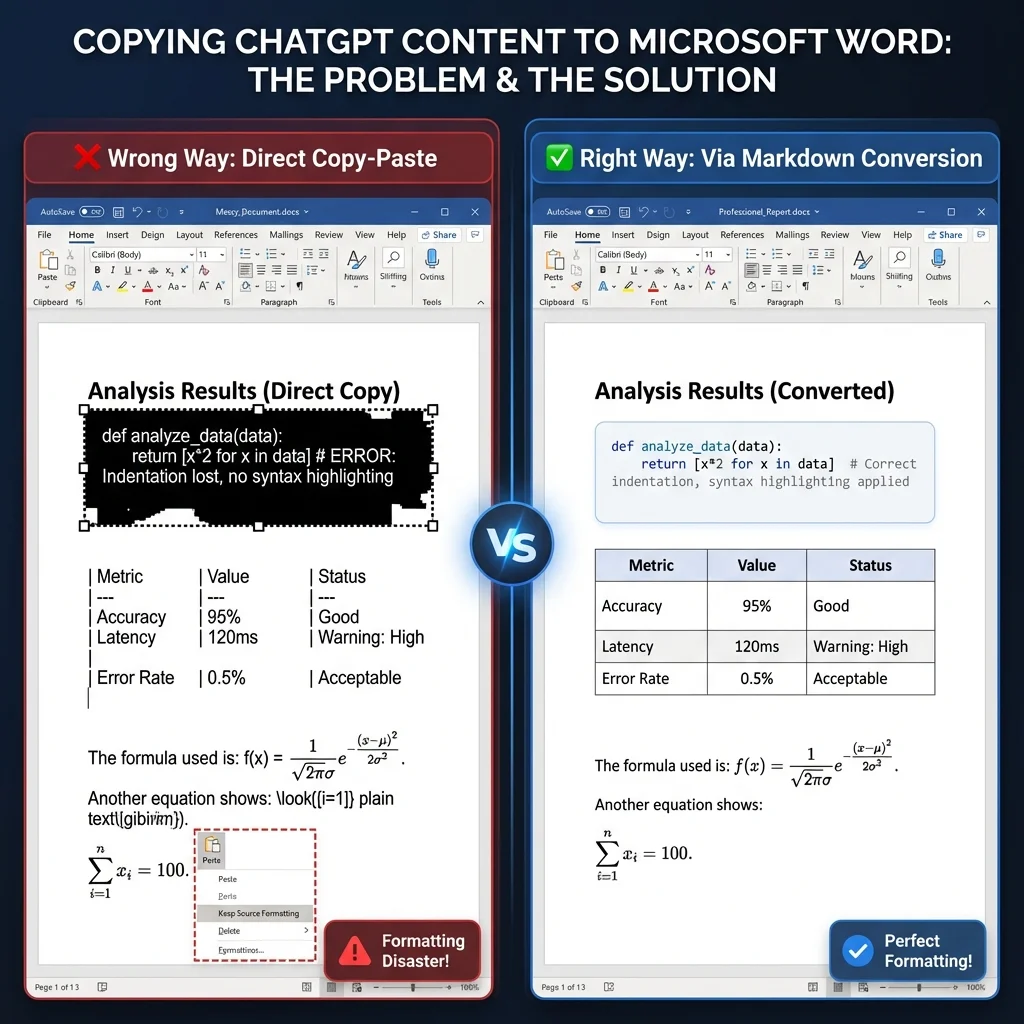
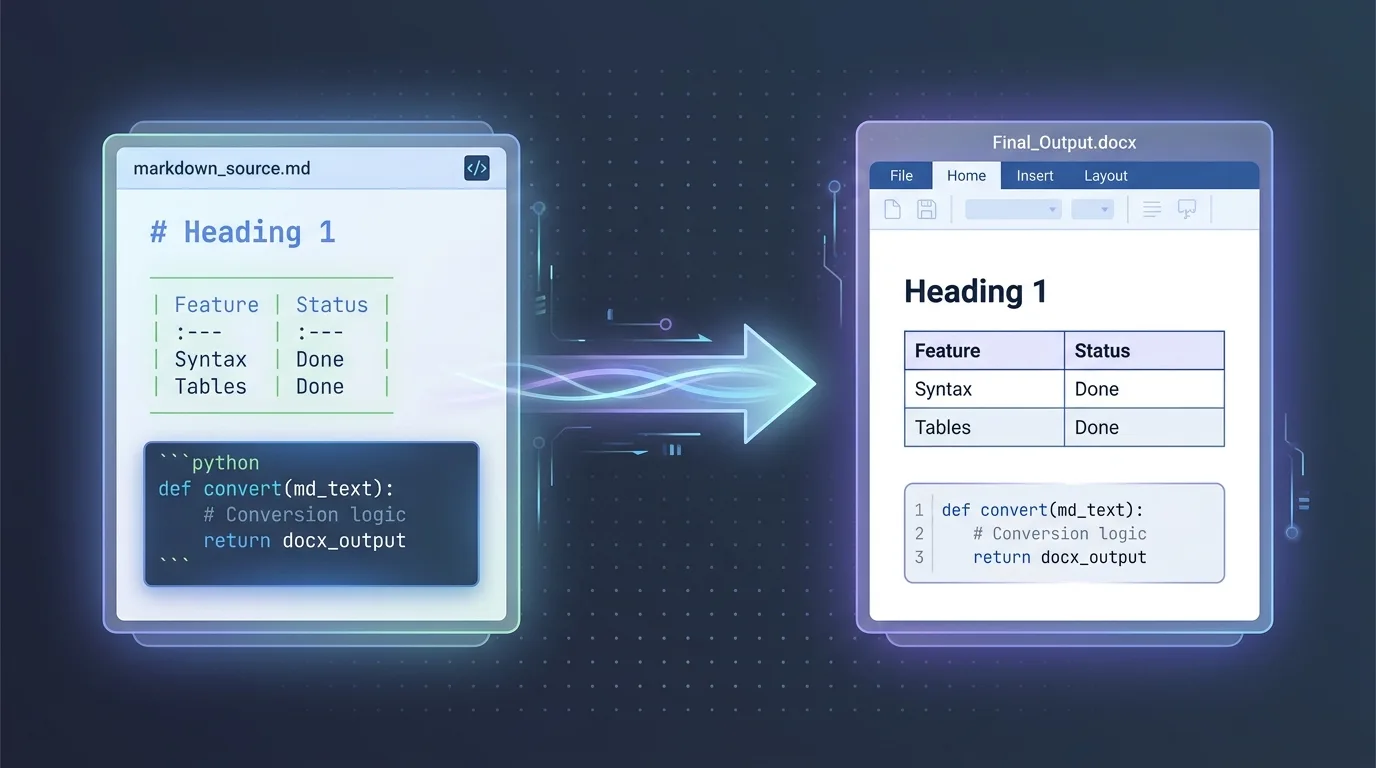
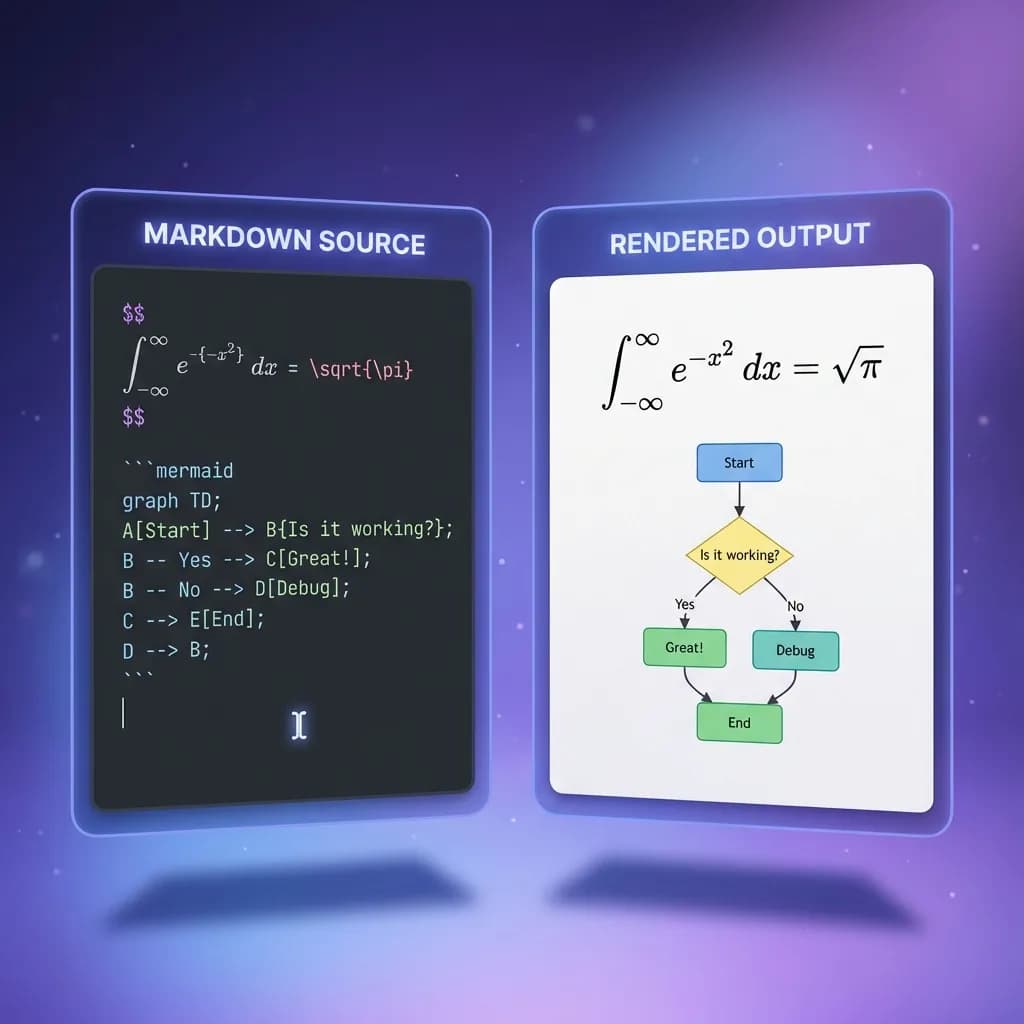
Our converter maintains the integrity of your Markdown formatting—headers, lists, code blocks, tables, emojis, images, LaTeX, Mermaid, footnotes, GitHub alerts, and emphasis are accurately translated into Word elements, preserving your document structure perfectly.
Live Preview Feature
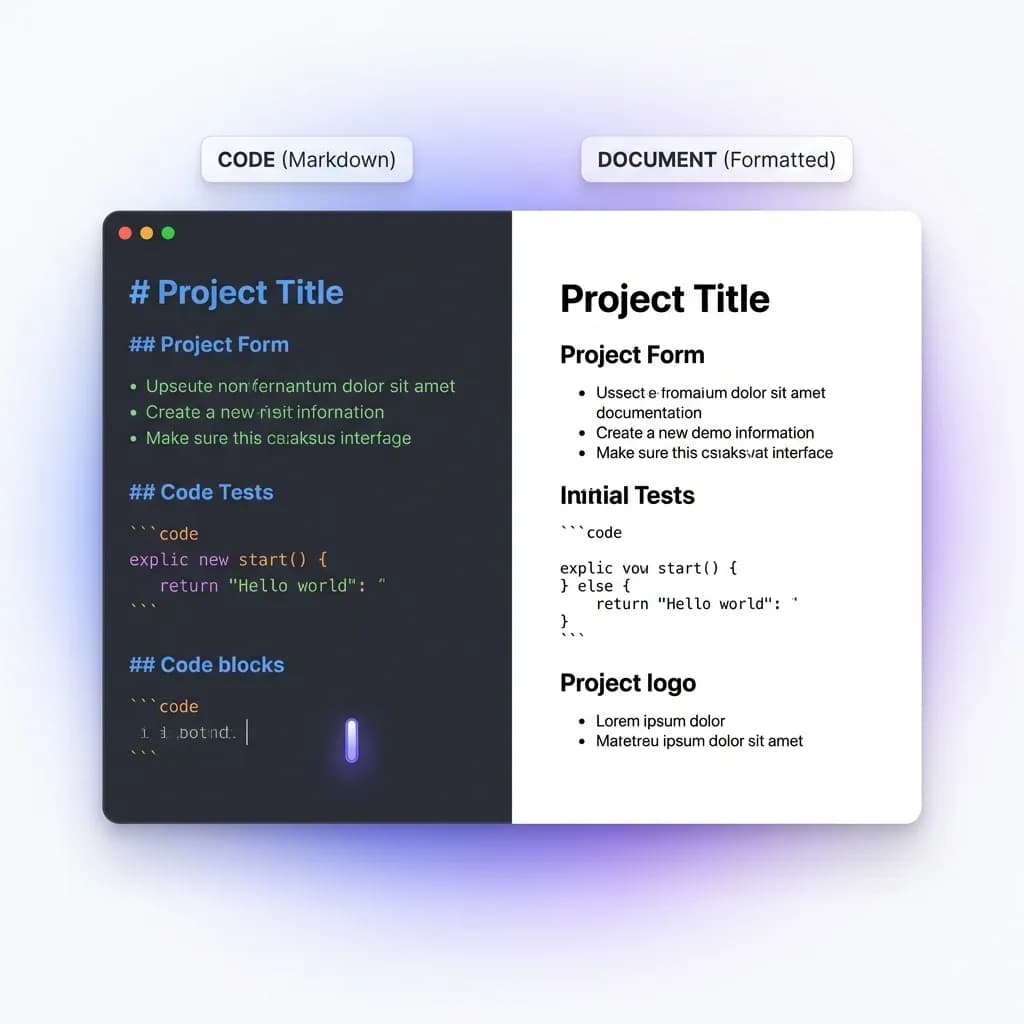
See real-time rendering of your Markdown content before conversion. This allows you to verify formatting, catch errors, and make adjustments for optimal Word output.
Multiple Format Support
Choose between .docx (modern) and .doc (legacy) formats to ensure compatibility with different Word versions and meet specific requirements from clients or institutions.
Best Practices for Markdown to Word Conversion
- 1.
Use Standard Markdown Syntax
Stick to common Markdown conventions and avoid platform-specific extensions to ensure the best conversion results across all elements.
- 2.
Preview Before Downloading
Always check the preview pane to verify your content renders correctly and meets your formatting expectations before generating the Word file.
- 3.
Select Appropriate Word Format
Choose .docx for modern compatibility and smaller file sizes, or .doc for legacy systems and older Word versions.
- 4.
Organize Content Hierarchy
Use proper heading levels (H1-H6) and structured lists to maintain document hierarchy that translates cleanly into Word's outline structure.